
IN THE HEART OF MANNHEIM
About Mannheim
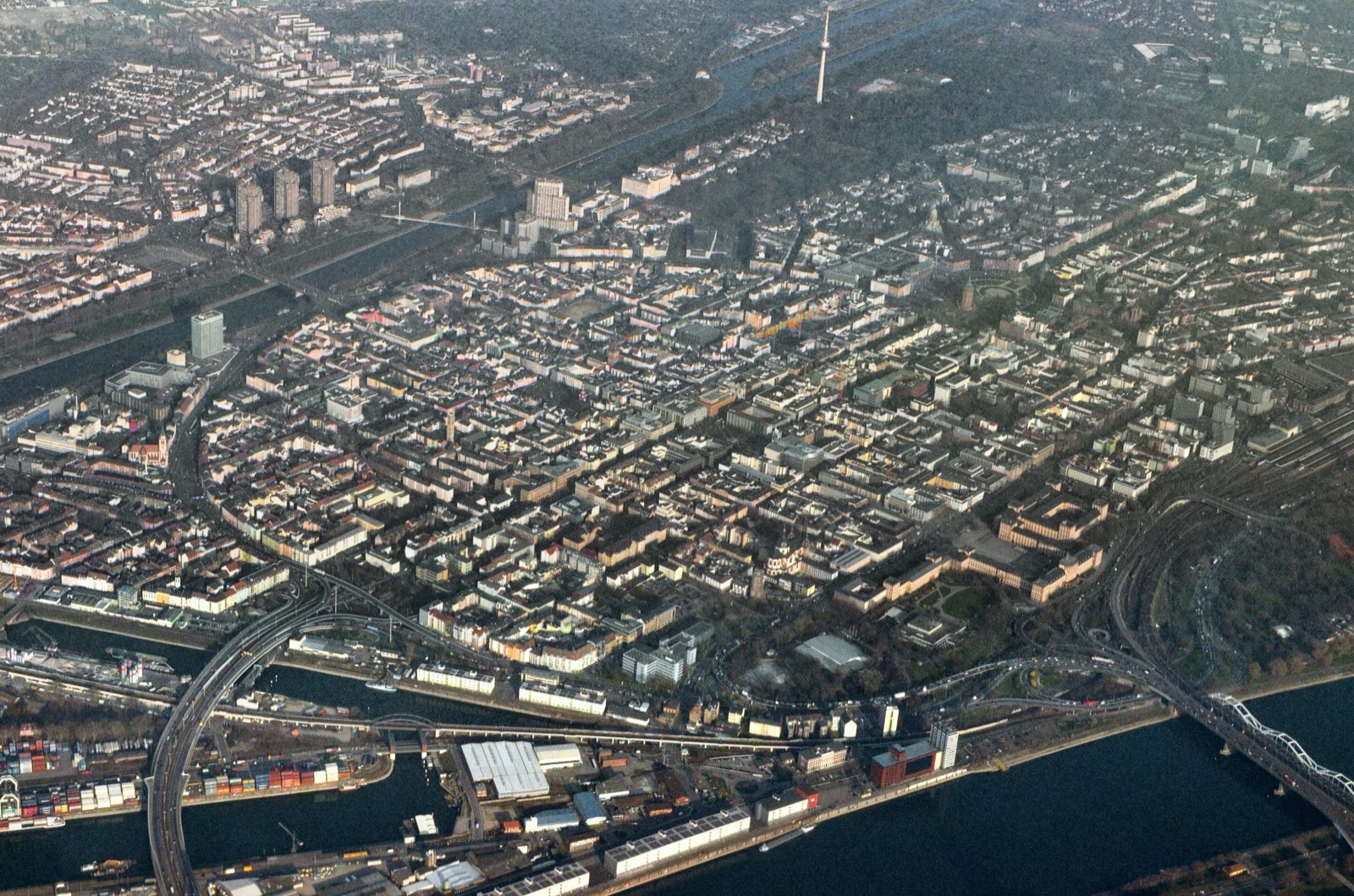
Q7 - 24 places your business in the Mannheimer Quadraten, directly beside the Q6 Q7 quarter and close to the city’s main connections.
WHY MANNHEIM
A location that connects business and city life
A central business address
Q7 places your company in the city centre, beside Q6 Q7 and within walking distance of shops, restaurants and daily services.
Connected beyond the city
Mannheim is a major ICE and TGV hub. Direct trains reach Frankfurt Airport in about half an hour, while five motorways run close to the city.
At the heart of a strong region
Mannheim is the economic and cultural centre of the Rhine-Neckar metropolitan region, where business, research and city life meet.
At the centre
The Planken, Fressgasse, shops, restaurants and everyday services are within easy walking distance.
Q6 Q7 quarter
The neighbouring city quarter brings together more than 45 brands, restaurants, a hotel, fitness and health services.
Local transport
The Strohmarkt tram stop is about 100 metres from Q6 Q7, with several lines connecting the city.
Minutes to the station
Mannheim Central Station is roughly a 10 to 15-minute walk away and is a major ICE and TGV hub.
Minutes to FRA
Direct ICE services connect Mannheim Central Station with Frankfurt Airport in about 30 minutes.
Paris by rail
High-speed trains connect Mannheim with Paris in around three hours.
Rhine-Neckar region
Mannheim sits at the heart of the Rhine-Neckar metropolitan region, with strong rail and motorway connections.
A CITY WITH A DISTINCTIVE STORY
From planned city to centre of innovation
The grid takes shape
The foundation stone was laid in 1606, and Mannheim received city privileges in 1607. Its planned street grid created the blocks that became the famous Quadrate.
An electoral residence
Elector Carl Philipp made Mannheim his residence and began the palace in 1720, opening an influential chapter in the city’s cultural history.
Ideas that moved the world
Karl Drais made the first documented ride on his bicycle precursor in 1817. In 1886, Carl Benz patented the world’s first practical motor car in Mannheim, marking the birth of the automobile.
A connected metropolitan centre
Today, Mannheim is a major rail hub and the economic and cultural centre of the Rhine-Neckar metropolitan region.
INVENTED IN MANNHEIM
Ideas that changed everyday life
Mannheim’s inventive history reaches far beyond the automobile. These milestones were developed or first presented here.
Bicycle precursor
Karl Drais set out from Mannheim on the first documented ride with his two-wheeled running machine.
The world’s first automobile
Carl Benz received the patent for the first practical motor car. Mannheim became the birthplace of the automobile.
Electric lift
Siemens presented the world’s first electric lift at an exhibition in Mannheim.
Lanz Bulldog
Fritz Huber developed the first crude-oil tractor for Heinrich Lanz in Mannheim, a milestone in agricultural mechanisation.
Automatic circuit breaker
Hugo Stotz completed the first thermal-magnetic automatic circuit breaker, the predecessor of modern breakers.
Rocket-powered aircraft
Julius Hatry built the world’s first functional rocket-powered aircraft.
Spaghetti ice cream
Dario Fontanella created the now-famous Spaghettieis in Mannheim.
Omnichannel
Since 2002, Telerion has advanced omnichannel real-time communications, connecting AI agents and people for organisations worldwide.
The city of squares
Mannheim’s centre is organised into lettered and numbered blocks instead of conventional street names. Q7 is part of this distinctive urban grid, close to business, culture, shopping and hospitality.
Sources: Q6 Q7, Stadt Mannheim, Stadtgeschichte Mannheim, Mannheimer Erfindungen, Wirtschaftsstandort Mannheim, Deutsche Bahn. Walking and travel times are approximate. Check current routes and timetables before travelling.